

Can We Still Close If the House Has a Leased or Financed Solar System?

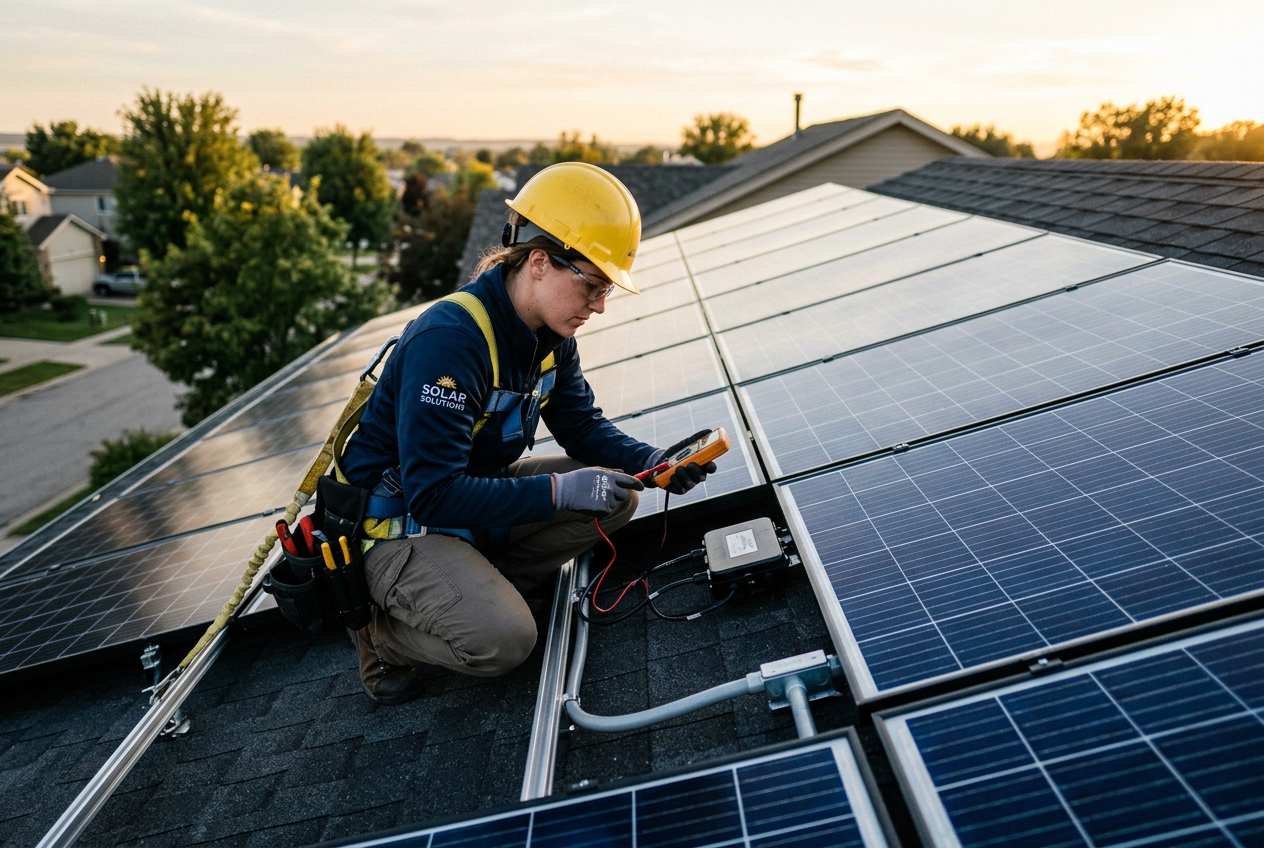
Yes — homes with leased and financed solar systems close in Chattanooga every month. But solar is the one inspection-adjacent item where the paperwork threatens the deal before the hardware does: the system on the roof may belong, in whole or in part, to a solar company, and that interest has to be resolved before title can transfer cleanly. Start that work at contract and solar is a footnote in the file. Discover it at the final walkthrough and it is a delayed closing.
Owned, leased, or financed — the first question
Everything downstream depends on who actually owns the array, so ask on day one. An owned-outright system transfers with the house like any other fixture — the simplest case, needing only condition documentation and warranty transfers. A leased system belongs to the solar company; the buyer typically assumes the lease (and must credit-qualify with the leasing company) or the seller negotiates a buyout. A loan-financed system usually carries a lien or a UCC-1 fixture filing that must be paid off or formally assumed — and released or amended in the record — before the title company can deliver clear title.
The transfer, step by step
The sequence that works: the listing side contacts the solar company at contract, not at the repair window. The company quotes the payoff or opens the assumption application; the buyer completes any credit qualification; the title office confirms what is filed against the system and what release or amendment the closing requires. The step nobody budgets for is the solar company’s own timeline — transfers at some national providers run two to six weeks, which is longer than most repair windows. That is why the day-one start matters more here than in any other trade.
What the closing file needs
A service or clearance letter from a licensed solar contractor stating the system was inspected and is operating properly. Production history — written proof the array generates what it should, which turns the system from a question mark into a selling point. Warranty transfers for the panels, inverter, and workmanship. The monitoring-account handoff, so the buyer actually controls the system they bought. And for leased or financed systems, the executed transfer or payoff paperwork with the corresponding title-record release.
The roof-work wrinkle
When the inspection also flags the roof under the panels, two trades collide: roofers will not touch an array, and the roof cannot be repaired through one. A licensed solar contractor detaches and re-sets the system around the roof work, then recommissions it and documents that it is producing. The detach, the roof repair, and the re-set all get scheduled against the same repair window — coordination that CloseReady-verified solar contractors handle as a matter of course.
The timeline question
Inspection-and-letter visits are commonly completed within days. Panel and inverter repairs depend on parts availability. Lease and loan transfers run on the solar company’s clock — the one timeline in the transaction nobody local controls, and the reason the smart sequence starts everything at contract rather than at the walkthrough.
What it typically costs
A solar inspection with written documentation typically runs $150–$400; panel-level repairs $300–$1,500; inverter replacement $1,500–$3,500; panel removal and re-set for roof work commonly $1,500–$4,500 depending on array size.
Typical ranges are published by CloseReady for planning purposes and reflect common pre-closing repairs in the Greater Chattanooga area. Your written quote may differ based on scope and site conditions. Every CloseReady contractor provides a written estimate.
Verified solar contractors for closing-deadline work are listed on the CloseReady Solar category page.